
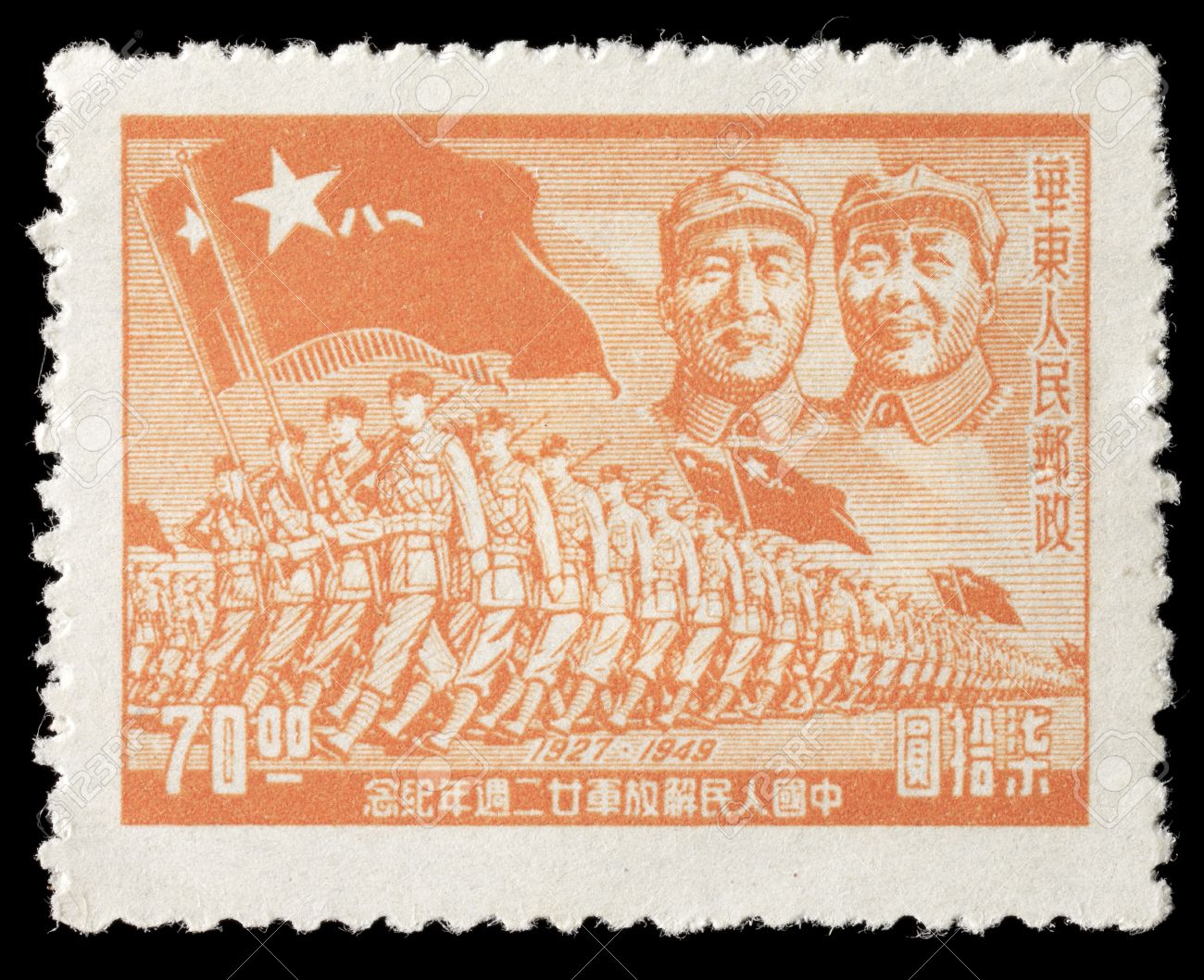
1927 – 1949 – Chinese Civil War.
The Chinese Civil War was fought between the Kuomintang (KMT) led government of the Republic of China (ROC) and the Communist Party of China (CPC), lasting intermittently between 1927 and 1949.
The war is generally divided into two phases with a suspension of hostilities from 1937 to 1945. From 1937 to 1945, hostilities were put on hold, and both the Kuomintang and the Communist Party of China joined forces to form the Second United Front to fight the Japanese invasion of China with eventual help from the Allies of World War II.
In 1945, following the Japanese defeat and the end of World War II, The civil war resumed and the Communist Party of China gained the upper hand in the final phase of the war from 1945–1949, generally referred to as the Chinese Communist Revolution.
The Communists gained control of mainland China and established the People’s Republic of China (PRC) in 1949, forcing the leadership of the Republic of China (ROC) to retreat to the island of Taiwan. A lasting political and military standoff between the two sides of the Taiwan Strait ensued, with the ROC in Taiwan and the PRC in mainland China both officially claiming to be the legitimate government of all China. No armistice or peace treaty has ever been signed and debate continues as to whether the civil war has legally ended.
1931 – Japan invades Manchuria.
1931 – Rupert graduates with a law degree from Fudan University, Shanghai, China. For the next 3 years, he worked as a lawyer in Shanghai.
1932 – Japan attacks Shanghai.
1934 – Rupert returns to Guangzhou having being misdiagnosed with tuberculosis. He was later correctly diagnosed as having a stomach ulcer.
1934 – Ida travels from Jamaica to Hong Kong with her 4 sons, Albert, Costa, Owen, George and Ramsay. Ida purchased 2 apartment buildings in Kowloon area of Hong Kong for the family to live. Grandmother Martha, Ida’s eldest daughter Yuk Zhen, Rupert’s wife and 2 children Li Man, Li Bang and Yuk Yu were brought from Niu Fu village to live in Hong Kong. For income, they lived on one building’s second floor and rented out the upper and lower floors of the building as well as renting out the second building. She hired a maid named Liu Si Mei to look after the cooking, cleaning and household chores. She left money and gold for Li Man to take care of the family. To promote Chinese culture and out of consideration of their blood relatives, most Chinese would agree to foster these overseas born children thus enabling the parents to go back overseas to run their businesses free of anxiety. Li Man, Rupert’s first wife was under this tradition of raising her brother-in-law’s sons without any remuneration. The family members living in the Hong Kong in 1934 were: Martha, Li Man, Li Bang, Yuk Yu, Yuk Zhen, Albert, Owen, George and Ramsay.
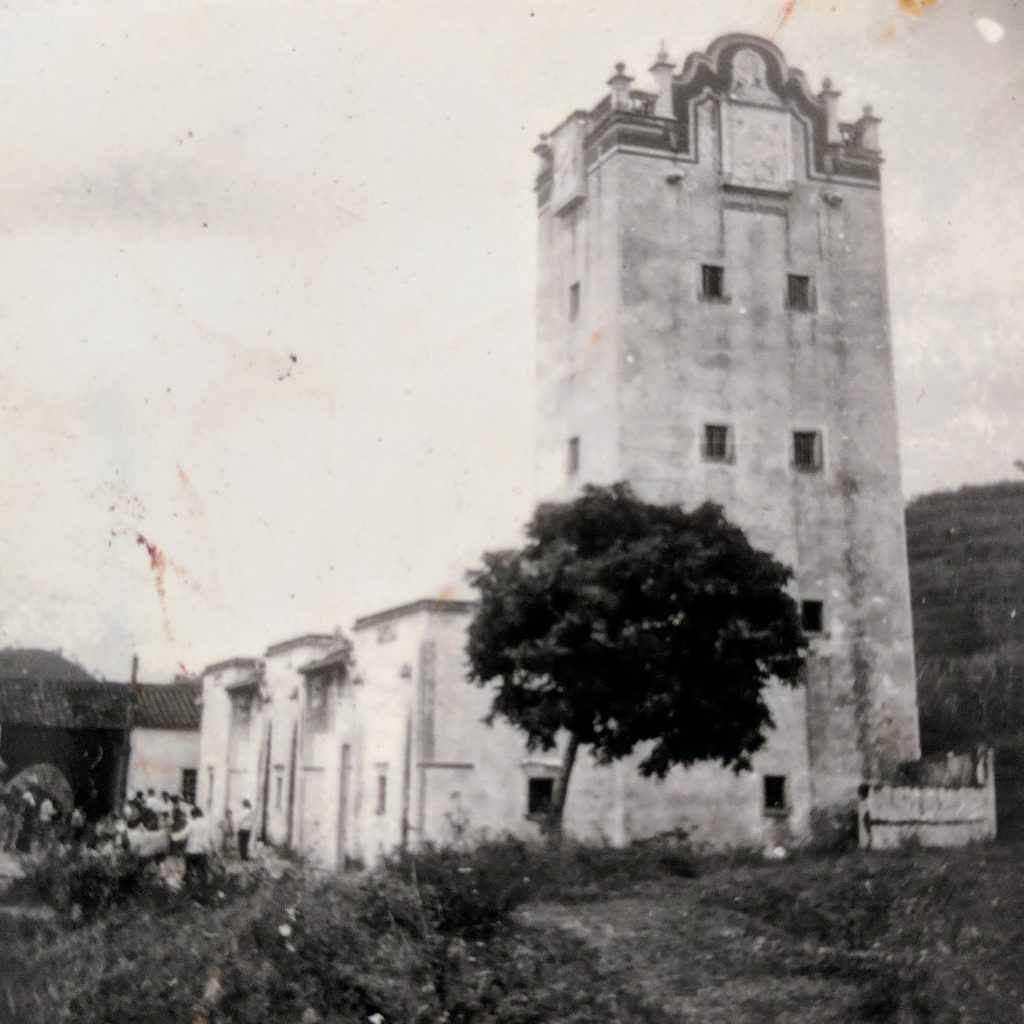
1935 – Percy returns the following year to China to build the family compound. According to Rupert’s son Chen Li Bang, Percy returned to China with 10,000 gold coins to finance the construction of the Chin See family compound in Niu Fu village.
1935 – Chin See Family portrait taken in Hong Kong.
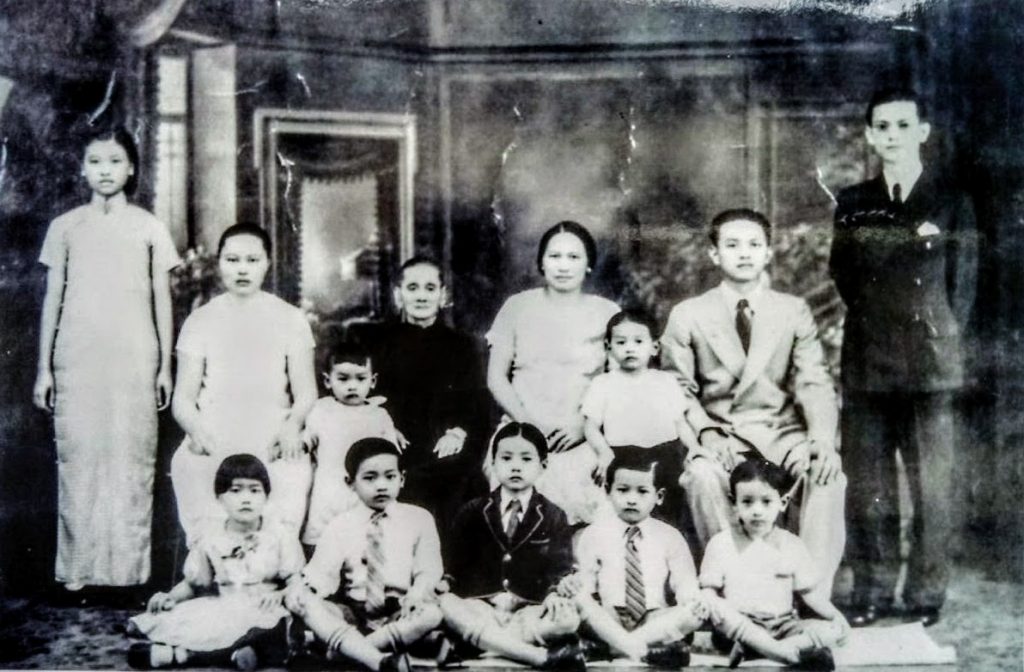
Back Row L-R , *Yuk Zhen standing ( 1921-1939), LiMan ( 1908-1991) 1st wife of Rupert & mother of Yuk Yu & LiBang, Ramsay b. 1933, Grandmother Martha (Hew Po 1869-1945) , Ida nee Chue (1903-1991) wife of Percy, George age 3 b. 1932, Percy 1904-1943 older brother of Rupert & husband of Ida nee Chue, Rupert (standing)1906-1983;
Front Row seated on floor, L-R – Yuk Yu b. 1929, Albert 1928-1992, LiBang b. 1926, Costa 1930-2015, Owen b. 1931-. Yuk Zhen (Jade Pearl) was the firstborn of Ida & Percy. She died at age 18 from appendicitis. She was 14 in this photo.
1936 – Rupert leaves China for the USA to attend Stanford University, California.
1936 – Percy, Ida and Costa returns to Jamaica.
1937 – Battle of Nanking (Nanjing).
The Nanjing Massacre or the Rape of Nanjing was an episode of mass murder and mass rape committed by Imperial Japanese troops against the residents of Nanjing, then the capital of China, during the Second Sino-Japanese War. The massacre occurred over a period of six weeks starting on December 13, 1937, the day that the Japanese captured Nanjing. During this period, soldiers of the Imperial Japanese Army murdered disarmed combatants and Chinese civilians numbering an estimated 40,000 to over 300,000, and perpetrated widespread rape and looting.
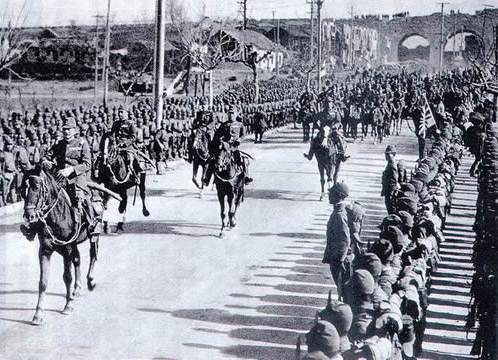
1937 – Japanese invades the southern Chinese Province of Guangdong.
Many inhabitants fled south to the relative safety of Hong Kong. Hong Kong as a British colony was thought to be safe from the Japanese as Japan had not declared war against Britain.
1939 – Rupert receives an MA. in Political Science from Stanford University, USA. He visited Jamaica on behalf of the Kuomintang government that same year.
1939 – Rupert transfers to the University of Chicago.
1939 – Yuk Zhen, eldest child and daughter of Ida and Percy dies from appendicitis at age 18.
1940 – Rupert marries Helen Hu in Chicago, USA and returns to Hong Kong.
1941 – Japanese attack of Hong Kong.
The Battle of Hong Kong (December 8–25, 1941), also known as the Defense of Hong Kong and the Fall of Hong Kong, was one of the first battles of the Pacific War in World War II. On the same morning as the attack on Pearl Harbor, forces of the Empire of Japan attacked the British Crown colony of Hong Kong. The attack was in violation of international law as Japan had not declared war against the British Empire. Within a week, the colony surrendered.
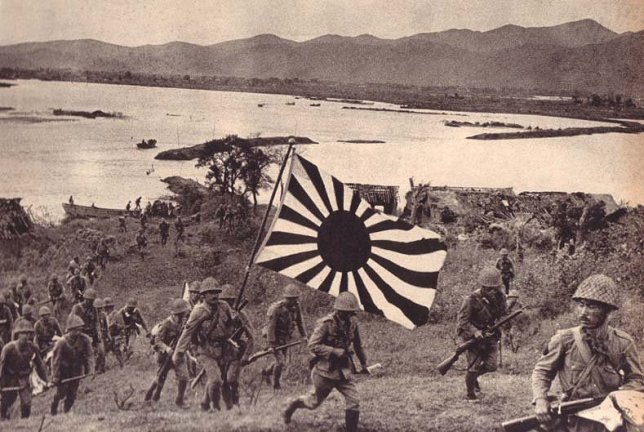
1941 – 1945 – Japanese Occupation of Hong Kong.
December 1941 to August 1945 was the darkest period of Hong Kong’s history in the Second World War. During the “Three years and eight months” under the Japanese Imperial Army’s occupation, Hong Kong suffered from the ravages of war, with fear and helplessness permeating citizens’ everyday lives. Most of the people fled to their hometown in China for a better life.
1941 – The entire family was in Hong Kong, having moved previously from Niu Fu village in 1934. The family members were: Martha (age 72) who was blind, Li Man (33), Rupert (35), Helen (pregnant), Li Bang (15), Yuk Yu (12), Albert (13), Owen (10), George (9) and Ramsay (8.)
Li Man was forced to relocate the family once more back to Niu Fu village.
Because of the interruption of the only railway service in Hong Kong, the family had to make the journey from Hong Kong to Niu Fu village by foot. They walked 40 lǐ a day and took 3 days to reach the village (approximately 40 miles.)
Li (Chinese: 里, lǐ, or 市里, shìlǐ), also known as the Chinese mile, is a traditional Chinese unit of distance. The lǐ has varied considerably over time but was usually about one third of an English mile and now has a standardized length of a half-kilometer (500 meters or 1,640 feet). This is then divided into 1,500 chi or “Chinese feet”.
On the first journey from Hong Kong to Niu Fu village, Li Man hired 2 young men with a palanquin (sedan) to carry Martha, who was blind.
She then returned for the children, Li Bang, Yuk Yu, Albert, Owen, George and Ramsay.
Rupert and Helen remained in Hong Kong until Helen delivered baby Li Ben in 1942.
1942 – Li Man returned for Rupert, Helen and 4 month old Li Ben.
1942 – Helen and Rupert enlisted in the war effort. They left Niu Fu village for Chongqing to join the fight against the Japanese. Chongqing was the provisional capital of the Republic of China. This was moved from Nanjing the former capital of the Republic of China, which fell to the Japanese in 1937. In Chongqing, Rupert was assigned to the Central Design Bureau, Admin. Planning & Management of the Kuomintang government. Helen worked as a translator for the US Embassy in Chongqing.
1943 – There was a severe drought in 1943. This affected the crops from the fields on the land that was rented out by the family to farmers in Niu Fu village. Due to the drought, the farmers were unable to pay the family rent. Hong Kong was still occupied by the Japanese, so rent could not be collected from the buildings owned by the family in Hong Kong. Also there were no remunerations from Jamaica due to the Japanese blockade. During this difficult period, the family had little to eat. Li Man and the children had to forage for wild vegetables and roots to feed the family as there was no income.
1943 – Percy passes away from malaria at age 40 (Jamaica.)
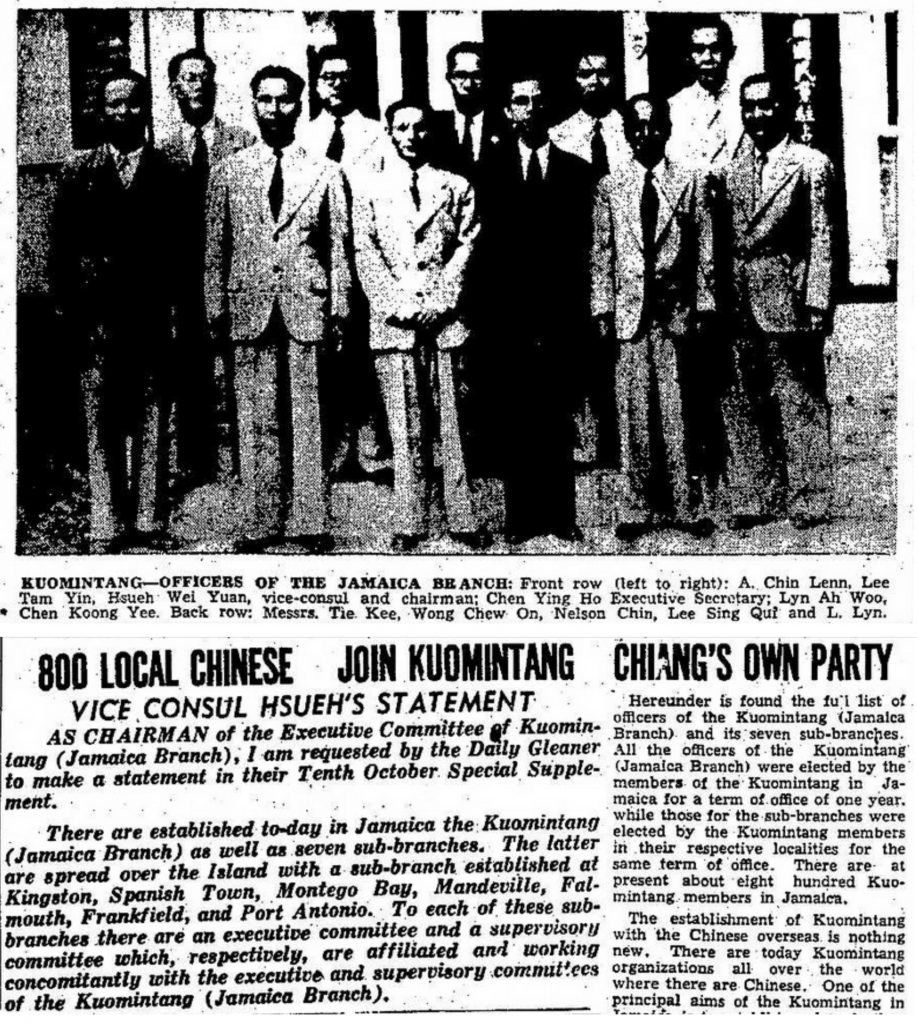
1944 – Rupert visits Jamaica to set up a local branch of the Kuomintang government. He traveled to Jamaica via a circuitous route to bypass Japanese controlled territories. He traveled from Chongqing to Bombay, India via rail, then boarded the General AE Anderson and sailed around Australia via Melbourne and Brisbane before finally docking at San Francisco, USA.
1945 – Martha passes away at age 76 (China.)
1945 – End of World War II.
Japan surrenders and China and Hong Kong is liberated from the Japanese.
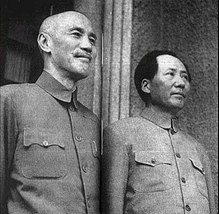
1945 – Resumption of the Chinese civil war.
The final phase of the war from 1945–1949 is generally referred to as the Chinese Communist Revolution.
1945 – Rupert was appointed as Secretary of Overseas Chinese Affairs Bureau (China.) He taught English & politics at the National Law & Commercial University (China.)
1945 – With the Japanese defeat and the end of WWII, life slowly returns to normal. Li Man and the family leaves the village and returns to Hong Kong.
1946 – Due to poor hygiene and shortage of medication after the war, Li Ben passes away from diphtheria (Hong Kong.)
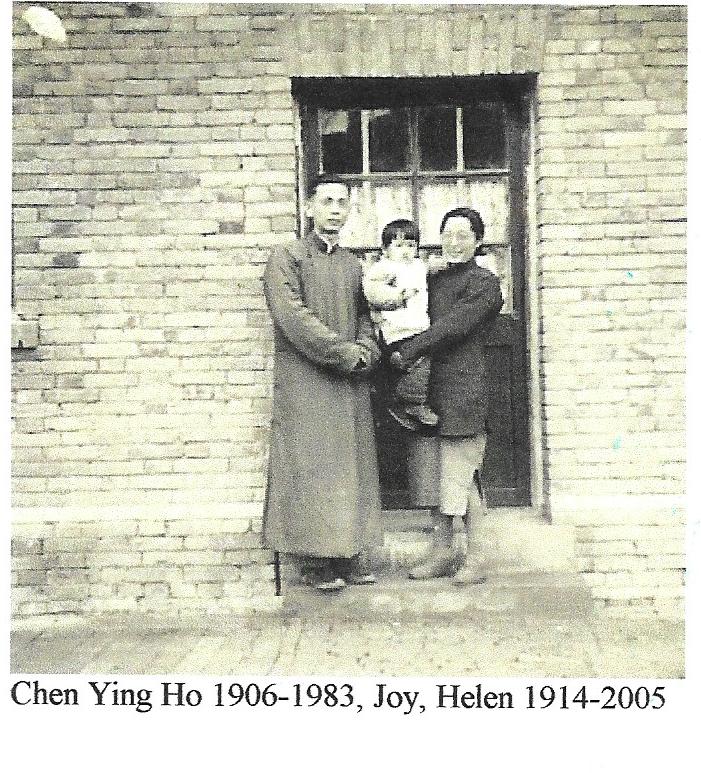
1947 – Rupert and Helen gives birth to daughter Joy (Nanjing, China.)
1947 – Albert marries Doris Tsang Chau Heung (Hong Kong) and returns to Jamaica.
1949 – The Communists gains control of mainland China and establishes the People’s Republic of China (PRC.)
The leadership of the Republic of China (ROC) was forced to retreat to the island of Taiwan. A lasting political and military standoff between the two sides of the Taiwan Strait ensued, with the ROC in Taiwan and the PRC in mainland China both officially claiming to be the legitimate government of all China. No armistice or peace treaty has ever been signed and debate continues as to whether the civil war has legally ended.
1950 – Rupert transferred to Import & Export Administration Committee of the Legislative Council (China.)
1951 – Rupert, Helen and Joy relocated from China to Jamaica.
1951 – Owen went to Beijing Railway Academy and graduated in 1954 (China.)
1954 – Railway Engineer Owen assigned to work in design office of Guangzhou Railway Bureau. Job description: Railway and Station Design.
1962 – Rupert Chin See appointed to the Jamaican Senate by Prime Minister Alexander Bustamante (Jamaica.)
1966 – 1976 – Chinese Cultural Revolution.
Launching the movement in May 1966 with the help of the Cultural Revolution Group, Chairman Mao soon called on young people to “bombard the headquarters”, and proclaimed that “to rebel is justified”. In order to eliminate his rivals within the Communist Party of China (CPC) and in schools, factories, and government institutions, Mao charged that bourgeois elements had infiltrated the government and society with the aim of restoring capitalism. He insisted that revisionists be removed through violent class struggle, to which China’s youth, as well as urban workers, responded by forming Red Guards and “rebel groups” around the country. They would begin to hold struggle sessions regularly, and grab power from local governments and CPC branches, eventually establishing the revolutionary committees in 1967.
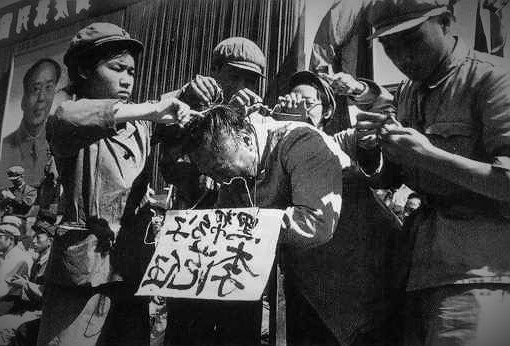
1966 – 19?? – It is during this period that the brothers had great difficulty. People were prevented from crossing the boarder into Hong Kong. Due to the Cultural Revolution, daily necessities and food were in severe shortage. All citizens had daily hardships and food was rationed by the Government. Many people were starving. At that time, Li Bang, Yuk Yu, George and Annie were still in Beijing and Li Man lived in Hong Kong. In order to provide some daily necessities to them, Li Man brought about 70 lbs of clothes and groceries to Beijing from Hong Kong by herself. She would leave everything with them and only wore a very thin jacket while returning to Hong Kong. She enabled all of her children to have more resources to stay in China.
With regard to food in China, later during and after the Cultural Revolution we have Ramsay’s own words recalling how Li Bang saved his own food coupons and sent them to Ramsay, a gesture which touched Ramsay greatly.
” Once I received a letter from Li Bang. When I opened his letter. Good Heavens, it enclosed some food ration coupons. This moved me terribly. According to Li Bang’s work category, his food ration was only 24 catties of basic food per month. How could he afford to give me any such coupons? This was letting me have food from his own mouth. Only under a spirit of utter unselfishness, self sacrifice, and loving concern, can such an act take place.”
One catty is a Chinese measurement of weight and is equivalent to 0.6 kilograms or 1.32lbs, thus 24 catties per month is equivalent to 31.7lbs of basic food per month.
1966 – George, Annie and Rosie leaves China for Jamaica. Rosie was several months old then.
1966 – Owen served 1 year in prison as a perceived Nationalist Sympathizer. He was sent to the countryside to do 5 years hard labor. During this period, his younger brother Ramsay also suffered the same plight.
19XX: The family struggles for several years. During this period, Owen’s son Simon was left in the care of a nanny. Owen and Rita were allowed to see their son just once a year. Owen tried to leave China but encountered many frustrating roadblocks with no end in sight.
1974 – Ida reaches out to brother-in-law Senator Rupert Chin See for help to get her sons, Owen and Ramsay, exit visas from China to Jamaica. Senator Rupert Chin See wrote an official request to China’s Premier, Zhou Enlai. Within 1 week of the receipt of letter, Owen, Rita and Simon were allowed to leave China for Jamaica.

1981 – Ramsay, Josephine and Wellington leaves China for Jamaica.